Site conditions in Whitby shift significantly between the established neighborhoods north of Dundas Street and the newer subdivisions pushing toward Brooklin. The former often rests on dense, silty-clay Halton Till — a legacy of the Wisconsin glaciation — while the latter encounters stratified sands and silts deposited by glacial Lake Iroquois some 12,000 years ago. This contrast means a footing design that works near Whitby Harbour may be dangerously undersized for a lot near Cullen Central Park. Our geotechnical team correlates standard penetration test data with laboratory index testing to determine the ultimate bearing capacity and settlement behavior unique to each Whitby site. For structures on variable fill, we integrate findings from a plate load test to validate in-situ deformation modulus before finalizing the shallow foundation design, ensuring compliance with the Ontario Building Code and CSA A23.3 requirements.
Bearing capacity in Whitby is governed less by shear failure and more by settlement control — a stiff till cap often masks compressible layers at depth.
Technical details of the service in Whitby
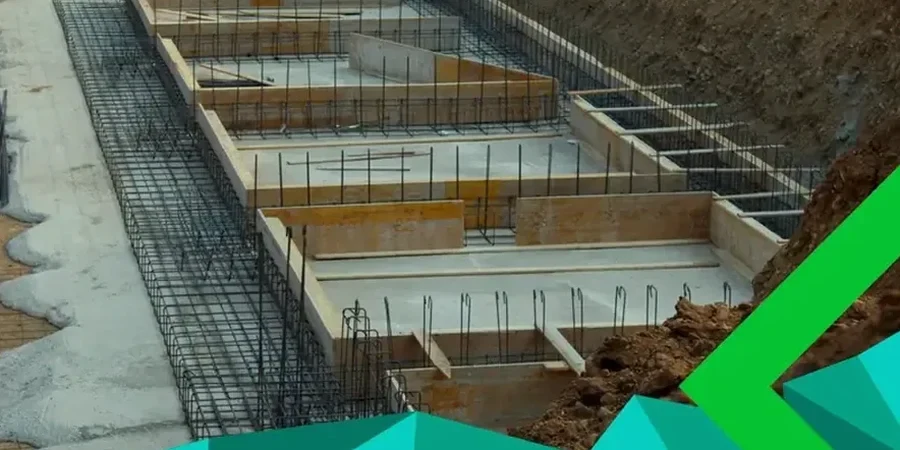
Typical technical challenges in Whitby
Whitby’s location along the Lake Ontario shoreline introduces a microclimate where freeze-thaw cycles penetrate deeper and last longer than inland Durham Region sites. The 1.2-meter frost depth mandated for shallow foundation design here is not a conservative assumption — it is a minimum. A footing placed above frost line in the silty-clay till will heave unevenly, cracking masonry and distorting door frames within two winter seasons. Equally critical is the seasonal groundwater rise: spring snowmelt and autumn rains can saturate the upper till, reducing effective stress and bearing capacity by up to 40 percent in poorly drained lots. Our geotechnical reports for Whitby projects include a site-specific drainage assessment alongside the foundation recommendations. Ignoring the perched water table in the Iroquois sand unit — common near Pringle Creek — leads to excavation instability and long-term softening of the bearing stratum beneath the footing.
Our services
Shallow foundation design in Whitby’s glacial deposits requires a focused set of geotechnical investigations and structural-geotechnical coordination operations.
Bearing Capacity and Settlement Analysis
We compute the ultimate and allowable bearing pressure for strip, pad, and mat foundations using limit equilibrium and deformation-based methods. Each analysis incorporates the site-specific stratigraphy logged from boreholes advanced into the Halton Till and underlying Iroquois sands, with laboratory consolidation testing (ASTM D2435) to calibrate settlement predictions for Whitby’s normally consolidated silt layers.
Foundation Type Recommendation and 3D Modeling
We evaluate the cost-performance trade-off between isolated footings and a full mat foundation for your Whitby site. Our recommendations are based on finite element settlement modeling, frost protection requirements, and constructability constraints — including proximity to existing heritage structures in downtown Whitby where vibration and excavation-induced settlement are primary concerns.
Common questions
What is the typical cost for a shallow foundation design report for a single-family home in Whitby?
For a standard residential lot in Whitby, a complete geotechnical investigation including two boreholes, laboratory testing, and a shallow foundation design report typically ranges from CA$2,920 to CA$3,850. The final cost depends on access constraints, the depth to competent bearing stratum, and whether groundwater monitoring wells are required.
How deep do footings need to be in Whitby to meet code requirements?
The Ontario Building Code requires a minimum footing depth of 1.2 meters below finished grade in Whitby to protect against frost heave. However, this depth may need to be increased if the upper soils consist of loose fill, organic material, or soft clay. Our field investigation determines the exact depth where competent bearing stratum — typically intact Halton Till — is encountered.
What soil type is most common beneath Whitby and how does it affect foundation design?
Whitby is underlain by the Halton Till, a dense, overconsolidated silty clay with sand lenses deposited during the last glaciation. While its bearing capacity is generally good, the presence of discontinuous sand seams can create perched groundwater conditions that reduce effective stress. Foundation design must account for both the till matrix strength and the drainage characteristics of these interbedded layers.
When is a mat foundation preferred over individual footings in Whitby?
A mat foundation is recommended when the allowable bearing pressure is low, when differential settlement between columns would exceed acceptable limits, or when a basement level is planned below the groundwater table. In Whitby, we often specify mat foundations for sites near Pringle Creek or on former agricultural land where the upper soil profile contains compressible organic silts.
Can you design shallow foundations on fill material in Whitby?
Engineered fill placed under controlled compaction can support shallow foundations, but uncontrolled fill — common in older Whitby lots — is unsuitable without ground improvement or deep foundations. We assess fill thickness, composition, and density using test pits and dynamic cone penetration testing, then recommend either removal and re-compaction or a deepened footing elevation bearing on natural till.