The surficial geology beneath much of Whitby tells a story of glacial Lake Iroquois: vast deposits of sand, silt, and clay that can present loose to compact conditions within the same site. The water table often sits just 2 to 4 meters below ground surface across the southern parts of town near the 401 corridor, which means that loose saturated sands—common in the Iroquois Beach deposits—are susceptible to settlement and even liquefaction under seismic loading. A generic foundation approach won't cut it here. Vibrocompaction design becomes a targeted engineering strategy to densify these granular profiles in place, increasing relative density before structural loads are applied. The process uses depth vibrators to rearrange soil particles into a tighter configuration, all without excavation or replacement. For Whitby developers and builders, understanding the local soil behavior is the first step toward a reliable, cost-effective ground improvement plan that aligns with the National Building Code of Canada. We often see SPT drilling data used to establish the baseline density profile, which then feeds directly into the vibrocompaction design parameters.
In Whitby's loose Iroquois sands, a well-designed vibrocompaction grid can raise relative density from 40% to over 75%—turning problematic ground into a competent bearing stratum without importing fill.
Technical details of the service in Whitby
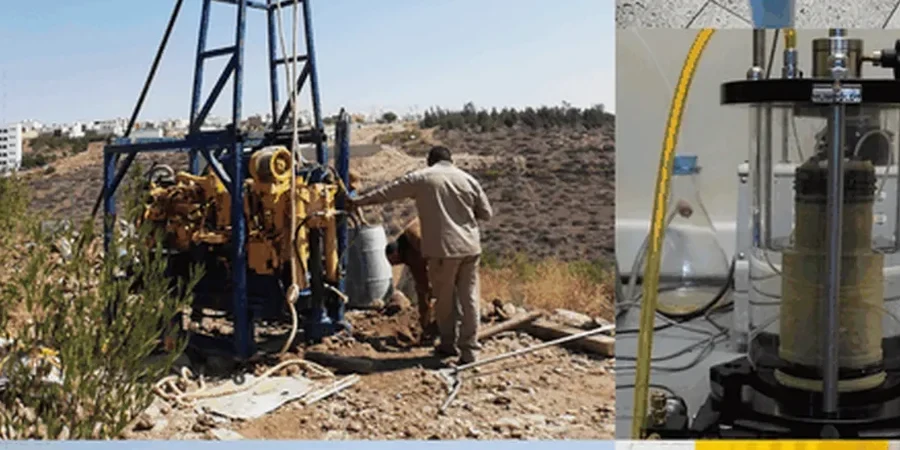
Typical technical challenges in Whitby
The 2015 Ontario Building Code, referencing the NBCC 2010 seismic hazard values, places Whitby and the broader Durham Region in a moderate seismic zone. Combine that with the Lake Iroquois loose sand deposits south of Dundas Street, and the risk of seismically induced settlement or flow liquefaction becomes a live design constraint—not just a theoretical footnote. A 2019 geotechnical investigation near the Whitby GO station encountered a 4-meter layer of loose fine sand with SPT N-values below 8, directly overlying a soft clay layer. Without intervention, settlement estimates exceeded 60 mm under design loads. Vibrocompaction design for that site specified two passes with a 130 kW electric vibrator on a 2.1-meter triangular grid, achieving a post-treatment N-value above 20 and cutting settlement predictions by two-thirds. This kind of real-world outcome is why the upfront design phase—grid geometry, energy input, and verification protocol—matters more than the vibrator's horsepower.
Our services
Our vibrocompaction design package gives Whitby project teams a clear, actionable road map from pre-treatment investigation to post-densification sign-off. Each deliverable ties back to the project's geotechnical baseline report and the performance criteria required by the structural engineer of record.
Vibrocompaction Grid Design
Determination of probe layout, spacing, and depth based on site-specific SPT/CPT data and target relative density. Includes energy input calculations and phase sequencing for multi-pass treatment.
Pre-Treatment Ground Investigation
Planning and execution of supplemental SPT borings or CPT soundings to map the extent of loose granular zones across the Whitby site, establishing the baseline for all design work.
Construction Monitoring & QA/QC
On-site monitoring of vibrator amperage, penetration rate, and backfill consumption during trial and production phases. Real-time adjustments keep the treatment within design tolerances.
Post-Treatment Verification Testing
Execution and interpretation of post-compaction CPT or SPT tests on a specified grid to confirm that the densified ground meets or exceeds the project's acceptance criteria.
Common questions
How long does it take to design a vibrocompaction program for a typical Whitby commercial site?
For a standard commercial lot of 0.5 to 2 acres with existing geotechnical data, the design phase typically takes 5 to 8 business days. That includes the probe grid layout, depth specifications, energy input targets, and a verification testing plan. If supplementary site investigation is needed first, add another 7 to 10 days for field work and lab turnaround.
What factors influence the cost of vibrocompaction design in the Whitby area?
Design fees generally range from CA$2,050 to CA$6,920 depending on site size, complexity of the soil profile, and the depth of treatment required. A straightforward single-building pad on clean sand falls toward the lower end; a multi-structure site with variable stratigraphy, high silt content, or deeper treatment depths will require more analysis and push toward the upper end of that range.
Can vibrocompaction work in silty sands or soils with more than 15% fines?
It can, but the design approach changes. Above 10–15% silt content, the vibrator's radius of influence decreases and the soil may not densify efficiently. In those cases, we evaluate whether a modified grid with tighter spacing, a bottom-feed vibrator system, or a switch to stone columns or rigid inclusions would serve the project better. The design report includes a constructability assessment based on the actual grain size curve from the site.
What verification testing is required after vibrocompaction in Ontario?
Post-treatment verification is mandatory and typically involves CPT soundings or SPT borings on a grid specified in the design. A common acceptance criterion is a relative density of 70% or higher, confirmed by at least one test per 200 to 400 square meters of treated area. The QA/QC plan follows CSA and OPSS guidelines, and the final report is submitted to the project's geotechnical engineer for sign-off before foundation construction proceeds.